Influencer marketing platform · 2020 · 6 min read

RockitBoost

Kickstarter, for Kickstarter.
Role
Solo, research to launch
Team
Me + the founder
Timeline
2020
Shipped 2020
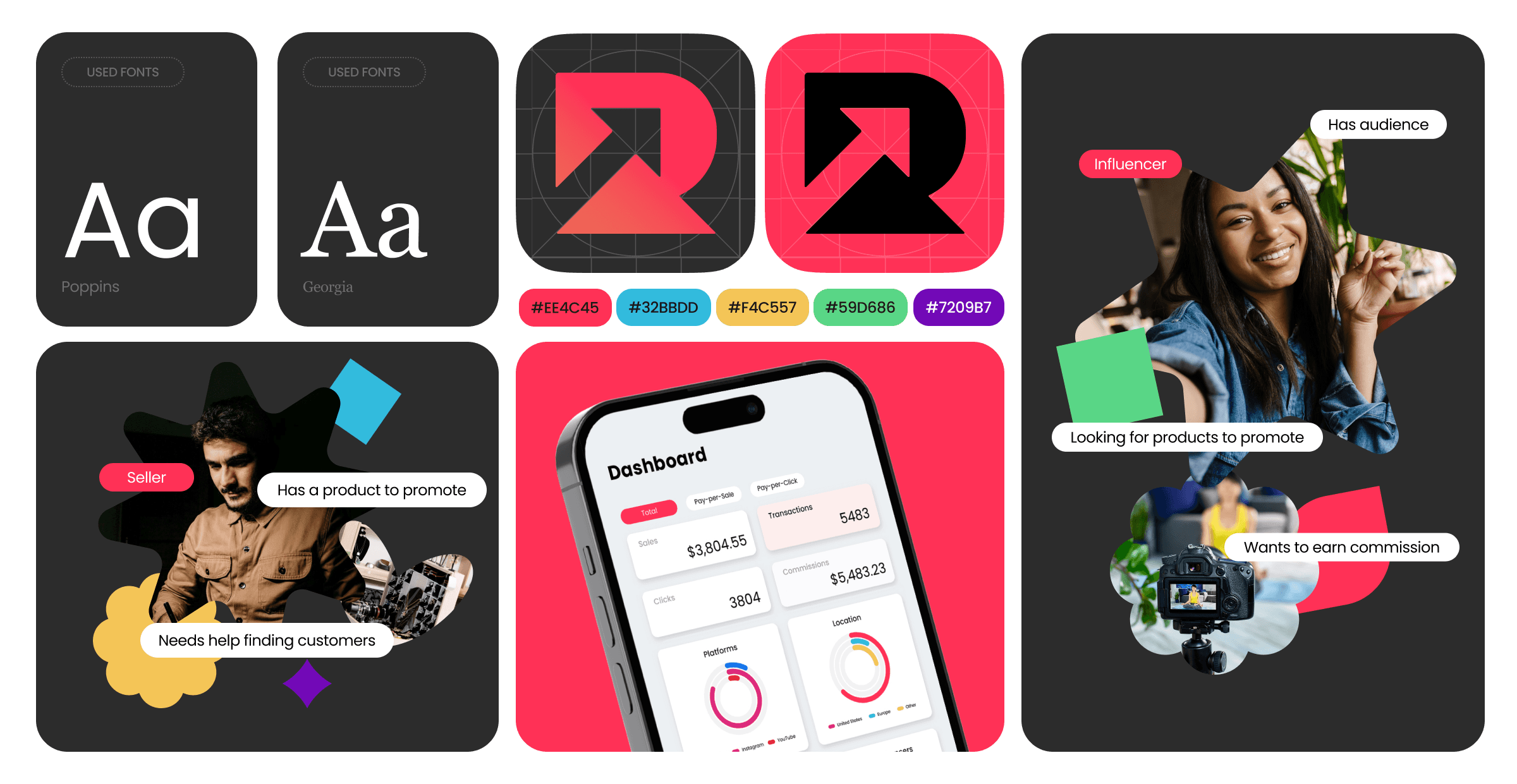
RockitBoost brand board: Poppins and Georgia type, the arrow-R mark, palette, a dashboard on a phone, and the seller and influencer personas
Info

A three-sided marketplace connecting social-media creators with crowdfunding sellers: referral links, commission tracking, analytics. I was solo everything: UX, product, and project manager. The flow I designed never changed. Everything around it nearly burned the project down.
01 — Taking on unfamiliar work

An analytics company, building an influencer platform.

RockitBoost connects influencers with sellers on Kickstarter, Indiegogo, and Amazon, generating referral links creators use to promote products and earn commissions. Simple concept. But all the commission tracking, click attribution, and analytics was being done by hand.

So the problem was two-fold: make it dead simple for influencers to get links and track earnings, and dead simple for sellers to find influencers and boost sales. I researched Kickstarter itself and saw what we were really building, "Kickstarter for Kickstarter": the same core act, generate a referral link, with a layer of commission tracking and analytics on top.

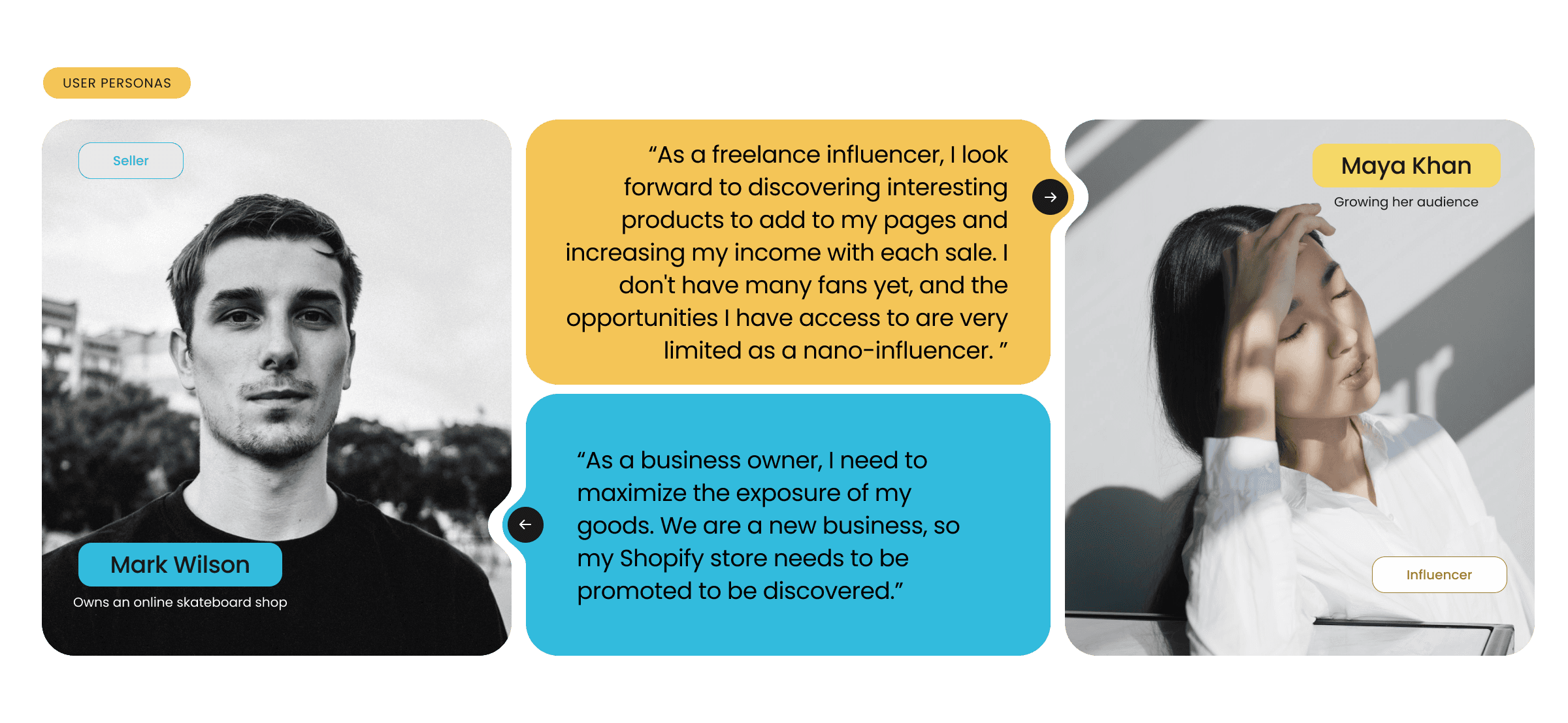
User personas: Mark Wilson, a seller who owns an online skateboard shop, and Maya Khan, a nano-influencer growing her audience
02 — The foundation

Three user types, one flow that never moved.

I wireframed every major flow (sign-ups for all three roles, analytics dashboards, the product marketplace) and presented them to the client directly. He loved them. We never pivoted; they stayed exactly as I defined them.

Influencers

Sign up, browse available products, get referral links, track commissions: clicks, engagement, earnings.

Sellers

Sign up, list a product, track analytics: influencers who picked it up, referral links generated, clicks, engagement, revenue.

Agencies

Like influencers, with an extra layer: agencies earn commission and distribute percentages to affiliated influencers. More resources, smaller individual cut.

seller campaign flow
KickstarterIndiegogo ShopifyApp StoreAmazon
02Campaign link
03Pick category
ArtDesignFood GamesHealthHome goods PetsTechnologyTravel
05Set commission
Google AnalyticsCollaborator invite
Cover imageHeader DescriptionCTA
08Shipping locations
EssentialPremium
10Payment
02b — …then everything else burned

The flow held. The UI got redrawn five times.

The client disliked the dev team's first UI and brought in his own designer, who then changed colors, layouts, and fonts again, and again, and a third time. Each "quick change" was an entire development cycle, redone.

The devs were furious: every redesign meant redoing finished work. The dev lead started calling my cell at midnight, a number I'd given him strictly for emergencies; apparently the designer qualified. Eventually I had the hard conversation with the client about budget: multiple full redesigns aren't aesthetic tweaks, they're development cycles happening over and over. My CEO reinforced it, the client agreed to hold the direction steady, and the redesigns stopped.

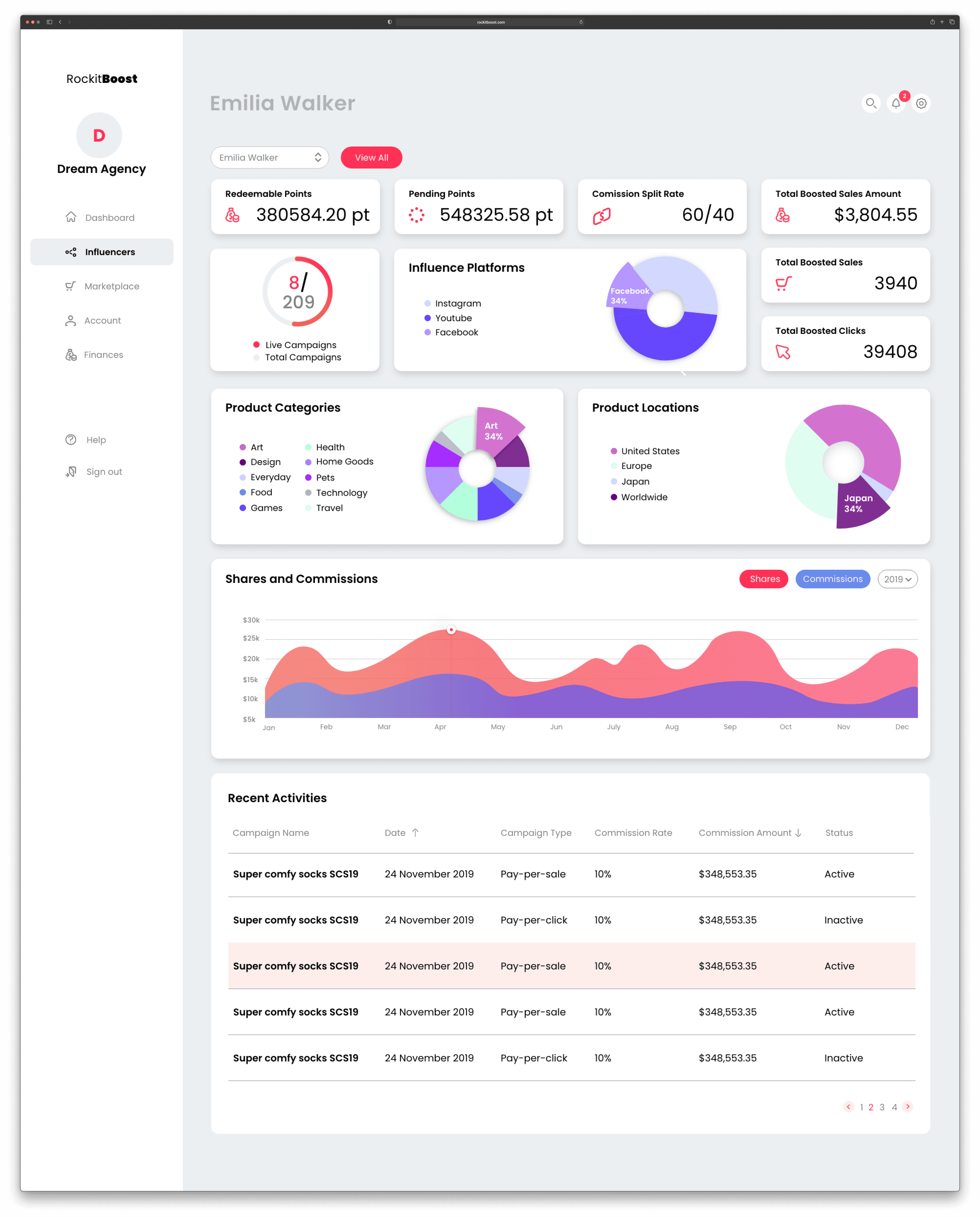
RockitBoost agency dashboard: one influencer's live campaigns, product categories and locations, and shares and commissions over the year
03 — When "impossible" almost killed it

The whole product was referral tracking.

And the devs came back with bad news: tracking clicks and purchases across Kickstarter, Indiegogo, and Amazon was "not possible without API integrations", and none of those platforms handed out public API access.

I respect developers. But when someone says something is impossible, I go look. I dug through how Kickstarter and Indiegogo handle referral tracking themselves (knowledge bases, support docs) and found it wasn't an API problem at all. It was a Google Analytics thing.

step 01

Authorize

Users authorize Google Analytics.

step 02

Track

Google Analytics tracks clicks and purchases on the linked platforms.

step 03

Pass

That data gets passed to our app.

step 04

Calculate

We calculate commissions on our end. Bam. Problem solved.

The devs didn't believe me at first, so I sent them the Google Analytics articles and Kickstarter's knowledge base on Intercom. Eventually they saw it: it actually was possible. The project was saved.

04 — more work